 Simulations With You
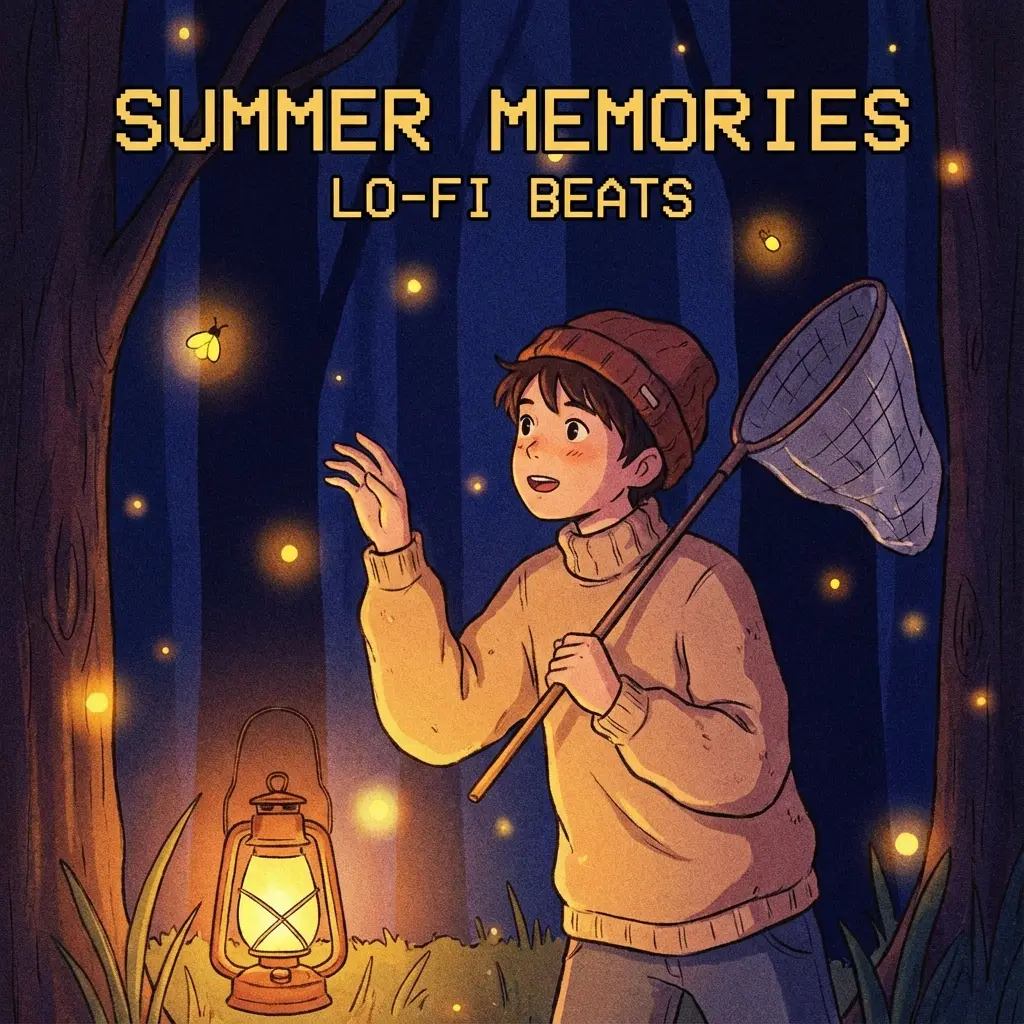
I grew up in a dense city of concrete and glass, where the tallest trees were carefully pruned sidewalk decorations and the brightest lights at night came from convenience store signs and apartment windows stacked fifty floors high. My world was a 500-meter radius of apartment buildings, convenience stores, and tutoring centers. The sky was always that washed-out orange-gray color that cities have at night—bright enough that you could walk home without a flashlight, but dark enough that you'd never see a single star.
Fireflies were magical creatures from Studio Ghibli films—things that didn't actually exist in my reality. I genuinely thought they were fictional, like dragons or talking cats. Something artists invented to make forests look more enchanting in animated films.
Then, in third grade, I saw a photograph of fireflies in a science magazine at the library. A dark forest filled with hundreds of tiny yellow lights floating in the air, each one a perfect little star suspended at eye level. That single image stuck in my mind like a splinter of light. I remember staring at it for so long that the librarian asked if I was okay. "Do bugs that glow like this actually exist?" I wondered. "Or is this some kind of special effect, like movie magic?" The caption said they were real. Living creatures. Actual insects that made their own light.
I didn't believe it. How could something that beautiful just exist in the world, doing its glowing thing in some random forest while I walked to school under gray skies every morning?
That Night at Summer Camp
Fast forward to seventh grade. Our school organized a three-day camping trip to the mountains, and I absolutely didn't want to go. The permission slip sat on my desk for two weeks before I finally, reluctantly, handed it in. Sleeping in a cabin with classmates I barely knew, doing "team-building activities" with people who intimidated me, eating cafeteria food cooked over a campfire—all of it felt like a punishment disguised as character-building, not a retreat.
The first day and a half went exactly as I'd feared: awkward, exhausting, mildly uncomfortable. But then came the second night. Around 9 PM, after dinner cleanup, our teacher asked, "Who wants to go on a night walk?" Most kids stayed behind to play cards and tell ghost stories in the warm cabin. I almost stayed too. But something—maybe that old magazine photo buried in my memory, maybe just restlessness—pulled me to raise my hand. Six of us ended up going. We walked into the darkness without flashlights, stumbling slightly on the uneven forest path, our eyes useless in the sudden absence of artificial light.
After what felt like ten minutes of blind walking, the teacher stopped us. "Stop here," they whispered, barely audible. "Just wait. Look."
At first, I saw nothing. Just blackness. Pure, complete, city-kid-has-never-experienced-this darkness. No streetlights. No phone screens. Nothing. Then, slowly, my eyes began to adjust. And there they were. First one. Then two. Then suddenly, as if someone had flipped a switch in my brain, dozens of tiny lights began to blink into existence all around us, floating at different heights, drifting in lazy, unpredictable paths. It looked like someone had shaken a jar of stars over the forest floor and they'd decided to just hang there, suspended, glowing, impossibly beautiful.
They were real. Those magazine fireflies. They actually existed. And I was standing right in the middle of them.
A Perfect Moment
How can I describe it? I felt like I could reach out and touch magic itself. One firefly flew near my outstretched hand, circling my fingertips in a slow, delicate spiral before drifting away into the darkness like it was saying hello. I could feel the night air, cool and clean in a way city air never is. I could hear the soft rustle of leaves and the distant sound of other students gasping in delight somewhere in the dark. Was it ten minutes? Twenty? Forty? Time completely dissolved. I just chased those lights with my hands out, laughing breathlessly, stumbling over roots and rocks I couldn't see, not caring at all. I was laughing with classmates I'd never spoken to before, people I'd been too shy to approach in the bright fluorescent hallways of school. But here, in the dark, chasing impossible lights, we were united by pure wonder. No introductions needed. No small talk. Just shared awe.
Why Does It Stick With Me?
Looking back, they were just bugs. Biological machines doing bioluminescence to attract mates, fulfilling an evolutionary function that has nothing to do with beauty or magic. But what I felt that night wasn't biology. It wasn't scientific. It was joy without condition. Pure delight with absolutely no ulterior motive attached.
- I wasn't thinking, "How is this productive?" or "What am I getting out of this experience?"
- I wasn't worrying, "Will this help my grades?" or "Should I be studying instead?"
- I wasn't planning, "I need to take a photo to prove this happened" or documenting it for social validation.
- I wasn't even trying to remember it or hold onto it. I was just fully, completely there.
I was just there. Completely present in my body, in the moment, in the darkness with the lights. Like a dog chasing a ball with complete abandon, or a child chasing soap bubbles with zero self-consciousness. No performance. No audience. Just pure, unfiltered wonder at something beautiful happening right in front of me.
That's what makes it stick. Not the fireflies themselves, but the feeling of being so completely absorbed in something that everything else—my anxiety about school, my awkwardness around classmates, my constant internal commentary about whether I was doing things "right"—all of it just vanished. For those twenty or thirty or forty minutes, I was just alive. Nothing more, nothing less.
What We Lose When We Grow Up
At some point—I can't pinpoint exactly when—those moments vanished from my life. They didn't disappear dramatically. They just slowly faded, replaced by something more "productive." Life became a series of efficient transactions with measurable outcomes. Traveling became about "getting the shot" for the photo album or social media grid, not about actually experiencing the place. Reading became about "self-improvement" and checking books off a list, not about getting lost in a story. Meeting friends became "networking" or "staying in touch" or "catching up"—functional, scheduled, with a beginning and end time written in a calendar.
We started viewing the world through the lens of utility, of return on investment, of "what am I getting out of this?" "What is this for?" became the only question that mattered. What is this conversation for? What is this walk for? What is this pause for? And in that relentless pursuit of purpose and efficiency, we lost the ability to just... watch a light float by. To stare at steam rising from tea. To notice the pattern of rain on a window. To do something for absolutely no reason other than it feels good.
We optimized the wonder right out of our lives, and then we wondered why everything felt flat and gray, like that city sky I grew up under.
Finding the Small Lights Again
I haven't seen real fireflies in years. I live in a city again, far from dark forests and summer camp nights. But I've realized that "firefly moments" still exist, even here, even now. They are the small, useless, beautiful pauses in our day—the ones we usually scroll past or optimize away.
Watching steam curl up from morning coffee. Noticing how light filters through leaves on a tree outside the window. Listening to rain without doing anything else. Following a bird's flight path for no reason. These are all firefly moments. Brief, purposeless, quietly magical. They don't accomplish anything. They don't make us more productive or successful or impressive. They just remind us that being alive can feel good, even for sixty seconds.
The challenge isn't finding these moments—they're everywhere, happening constantly. The challenge is giving ourselves permission to actually notice them without feeling guilty about "wasting time."
Try This: Digital Stargazing
You don't need a forest or a camping trip to practice wonder. Try this experiment right now, wherever you are:
- Turn off the lights in your room if you can, or at least dim your surroundings.
- Open our Firefly Forest simulation (link below) on full screen.
- Don't "do" anything. Just move your mouse or finger gently across the screen. Watch how the lights follow, drift, and glow. Notice the patterns they make. Don't try to win or achieve anything. There's no goal, no score, no right way to do this. Just exist with them for 60 seconds. Let yourself just... watch.
Can you feel it? That small flicker of wonder? That's the feeling. That's what we're after. It's still there, even after all these years.
✨ Enter the Digital Forest
I built Firefly Forest as a way to recreate that seventh-grade feeling—that sense of chasing lights in the dark with no agenda, no pressure, no purpose except wonder. It's a quiet digital space where you can chase the glow. No scores, no goals, no timers, no achievements to unlock. Just you and the lights, moving together in the dark. It won't make you more productive. It won't improve anything. But maybe, for a minute or two, it'll remind you what it feels like to just... be.
Visit Firefly Forest ✨Closing Thoughts
When was the last time you did something just because it felt good? Not because it was healthy, or profitable, or impressive, or on your self-improvement checklist—but just because it was delightful? Just because it made you feel something other than efficient?
Tonight, give yourself permission to chase a useless light. Whether it's steam rising from tea, a pattern of rain on the window, shadows moving on a wall, or digital dots on a screen that glow when you move your cursor. Chase it without reason. Chase it without documenting it. Chase it just because. You might find that in those "unproductive" moments, when you're doing something for absolutely no good reason, you actually feel most alive. Most human. Most like that seventh-grader standing in a dark forest, hands outstretched, laughing at floating lights.
That kid is still in there. The one who can be amazed. The wonder didn't disappear—we just stopped giving it permission to exist. But it's waiting. All you have to do is stop, look, and let yourself feel it again.