 Simulations With You
The year I started running, I wanted a running watch. Not just any watch—a proper running watch that could track my routes with GPS, monitor my heart rate in real time, and tell me if I was running too fast or too slow. I'd seen other runners checking their wrists mid-stride, tapping buttons without breaking pace, and I wanted that same sense of control over my progress.
So I started researching. I watched YouTube reviews while eating breakfast. I read recommendation threads in running communities during lunch breaks. I scrolled through endless comparison charts late at night, weighing features I barely understood against prices that made me wince. Eventually, after weeks of this, I found a model I really liked. Sleek design, intuitive interface, all the features I wanted, glowing reviews everywhere.
The problem was the price. It cost almost three times what I'd originally planned to spend. Way more expensive than I'd expected for what I told myself was "just a hobby."
The Choice, and the Disappointment
After going back and forth for days—adding the expensive watch to my cart, then removing it, then adding it again—I finally gave up and bought a much cheaper model instead. It had everything I technically needed: GPS tracking, heart rate monitoring, pace alerts, customizable intervals. The design was a bit clunky compared to the sleek one I'd been dreaming about, and the brand wasn't one people would recognize or compliment. But on paper, it checked all the functional boxes.
Honestly? The first few days felt like buyer's remorse. Every time I strapped it on for a run, a little voice in my head whispered: Should've just bought the expensive one. Should've saved up a bit longer and gotten the good one. When I saw other runners with premium watches, I felt a tiny pang of envy. Every time I glanced at my wrist, it felt like I'd settled for second best. Like I'd chosen the backup option when I should have held out for what I really wanted.
The watch worked fine. It did exactly what it promised. But emotionally, it felt wrong. It felt like a compromise.
But Then, Time Passed
A week went by. Then a month. Then the seasons changed—summer turned to fall, fall to winter.
At some point, without me really noticing, something shifted. I stopped comparing my watch to others. I stopped thinking about what I "should have" bought. Instead, I realized I'd become completely, comfortably familiar with this particular watch. I could find the start button with my thumb without looking, even with gloves on in winter. I knew exactly which screen showed my current pace versus my average pace. The slight delay before the GPS locked on became predictable, expected, part of my warm-up routine.
The screen layout that initially felt clunky now felt intuitive—like it was designed specifically for the way my brain processes information mid-run. When I ran, I stopped thinking about the watch as an object on my wrist at all. It had just become an extension of my runs, a quiet companion that did exactly what I needed without demanding attention.
Four years later, it still works perfectly. The battery still lasts for days. The features are still more than enough for how I run. The strap is worn but comfortable. And sometimes, when I see someone with that expensive watch I almost bought, I catch myself thinking: I'm really glad I didn't buy that one. Not because it's a bad watch—it's probably excellent. But because this one, this clunky, cheaper, "compromise" watch, turned out to be exactly right for me.
Like a Radio Frequency
This whole experience reminded me of something my grandparent used to do with an old radio. Have you ever used one of those vintage radios? The kind with a physical dial you turn slowly to find the right station, watching the red needle move across numbered frequencies.
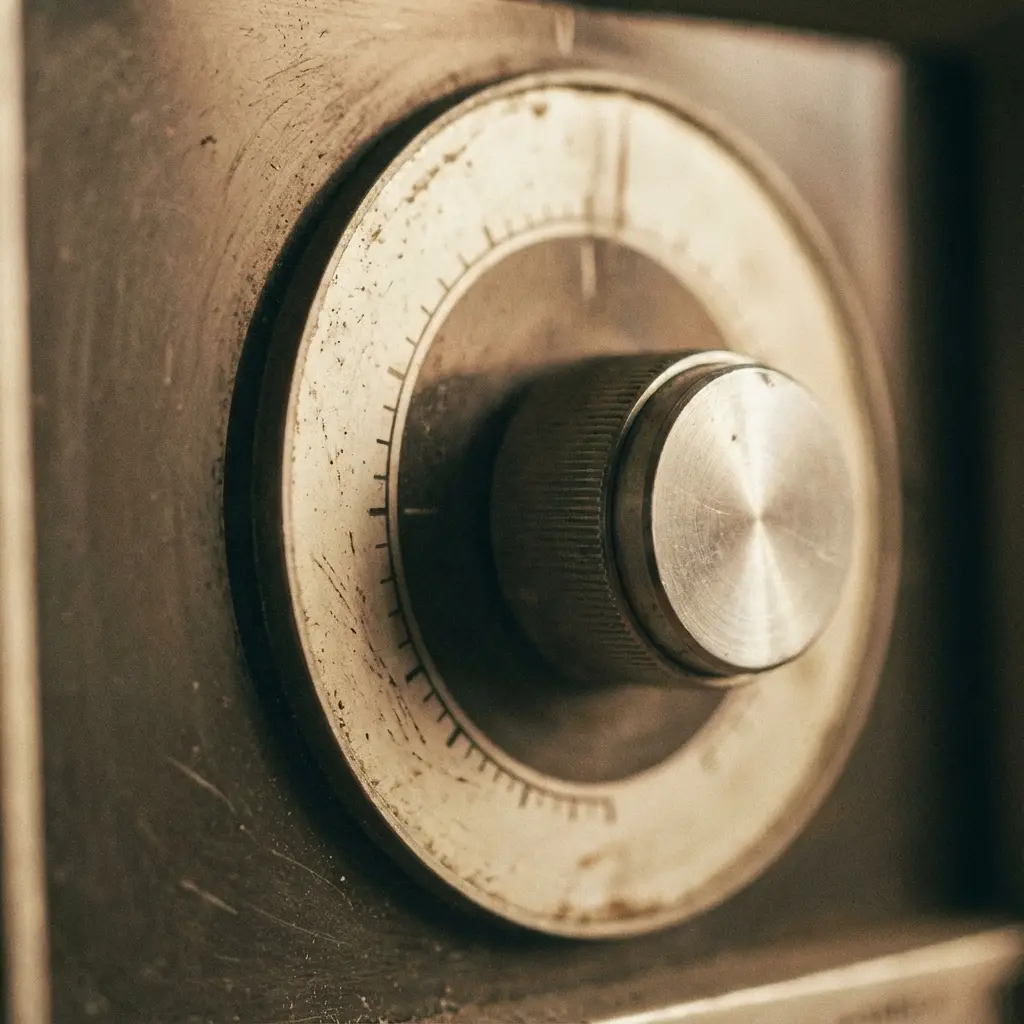
At first, when you start turning, it's all static—harsh, crackling noise that sounds almost painful. You turn the dial this way and that, and sometimes it feels like you're getting close to something—you hear a faint hint of music or voices underneath the noise—then it slips back into pure static again. When you get impatient, you spin the dial faster, hunting desperately for clarity, and you blow right past the clear signal without even noticing. Too fast, too eager, you miss it completely.
But if you slow down and turn the dial just a little at a time, millimeter by millimeter, breathing calmly, not rushing—there's a magical moment when the static suddenly fades away and the music comes through perfectly, clean and clear and beautiful. That's the sweet spot. The right frequency. And once you find it, you wonder how you ever listened to anything else.
The In-Between Space
That initial awkwardness you feel when trying something new—whether it's a running watch, a new job, a new city, a new relationship? That uncomfortable "this doesn't feel quite right yet" sensation? That's just static. It's not a sign that you made the wrong choice. It's not proof that you settled or failed. It just means you haven't found your frequency yet. You haven't tuned in.
We live in a world of instant gratification. Click, swipe, buy, receive. Same-day delivery. Instant results. If something doesn't feel perfect immediately, we assume it's wrong and move on to the next thing. But the things that really matter in life—deep relationships, meaningful careers, lasting habits, true comfort with ourselves—they don't work like Amazon Prime. They work like that old radio dial. You can't just click a button and have them arrive perfectly tuned. You have to turn the dial slowly, patiently, over weeks and months and sometimes years, listening carefully for that moment when the static clears.
📻 Practice Tuning In
Want to experience this feeling for yourself? I created a simple interactive radio tuner that simulates the experience of finding your frequency. Turn the dial slowly through layers of static and noise, and discover the hidden music waiting on the other side. It's a small practice in patience, in slowing down, in trusting that clarity comes to those who take their time. No pressure, no rush—just you and the dial.
Open Radio Tuner 📻I strapped on my four-year-old running watch again this morning before my run. Still works perfectly. Battery still holds a charge. GPS still locks on within seconds. Still does everything I need, nothing I don't. Would I have been happier if I'd bought that expensive one back then? Honestly, I don't know. Maybe. Maybe not. But what I do know—what I know with absolute certainty—is this: I'm perfectly, completely happy with what I have right now. Because it's not just a watch anymore. It's my watch. My frequency. The one I found by giving it time, by not giving up during the static, by staying patient long enough to let it tune in.
Sometimes the right choice isn't the one that feels perfect immediately. Sometimes it's the one that becomes perfect slowly, quietly, over time—like finding a radio frequency in the dark, one tiny turn of the dial at a time.