 Simulations With You
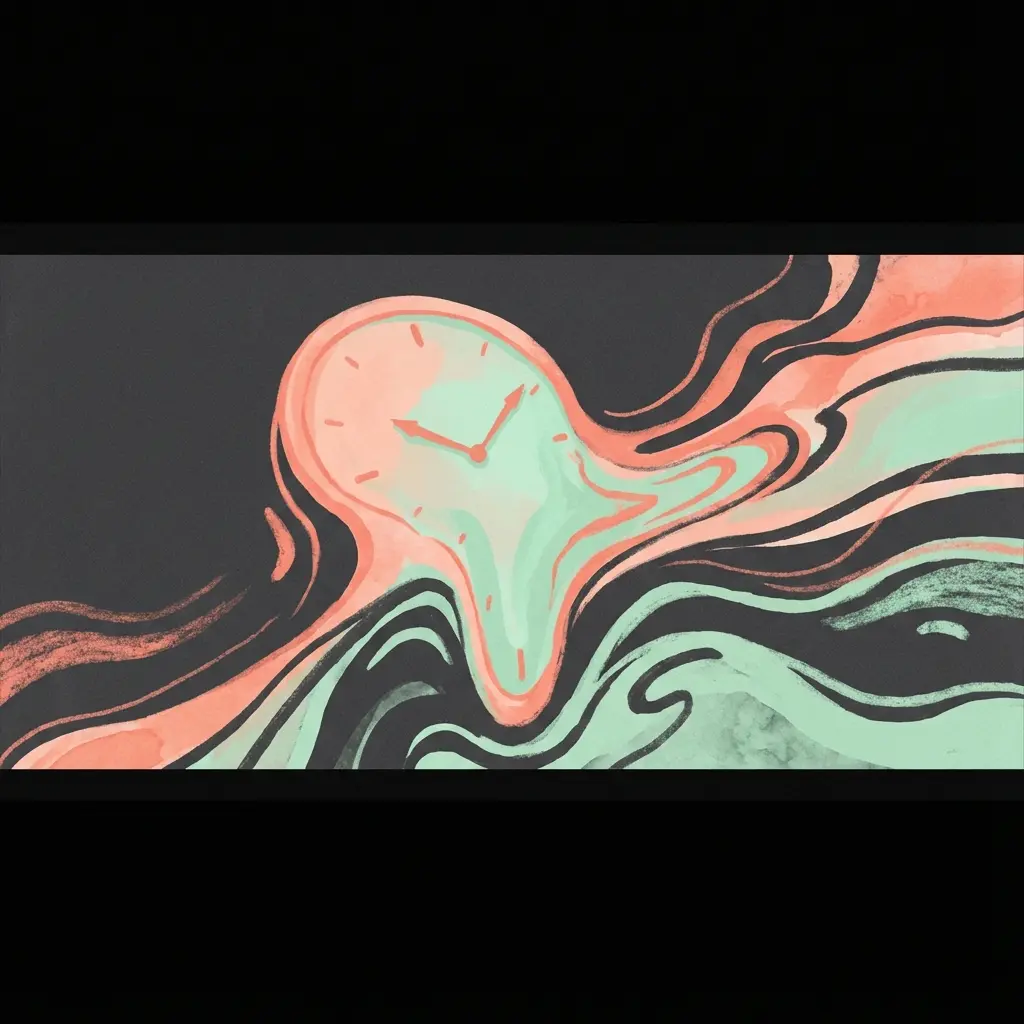
The alarm went off. 7:00 AM. I hit snooze. It rang again. Hit snooze again. Then I opened my eyes, and the clock read 7:32. "Only 32 minutes left." The panic started immediately.
Shower in five minutes. Get dressed in three. Breakfast? Skip it—no time. Grab coffee on the way. Stuffing things into my bag, hunting for keys, pulling on shoes—all while numbers kept spinning relentlessly in my head. "Need to leave by 8:05. No, 8:00. Or I'll definitely be late."
By the time I stepped outside, I felt as exhausted as if the day had already ended. And it had barely begun. My shoulders were tense, my jaw was clenched, and I hadn't even gotten to work yet.
You know this feeling, don't you? Always rushing toward something. Afraid to look at the clock because you already know you're behind. That persistent thought: "I don't have enough time." But recently, on a particularly frantic Tuesday afternoon, I started wondering: is time actually moving faster, or am I the one speeding up?
The 10-Second Experiment
One afternoon, while waiting impatiently for a file to download (and tapping my fingers on the desk), I tried a simple experiment I'd stumbled across online. It sounded almost silly, but I was curious.
Try This Right Now
1. Close your eyes (yes, actually close them).
2. Count to ten in your head at what feels like a normal, natural pace ("One Mississippi, Two Mississippi...").
3. Open your eyes and check the actual clock.
When I opened my eyes, I was genuinely shocked. My "ten seconds" had only taken six seconds on the actual clock. Six. Not eight or nine—six.
It was a small, simple realization, but suddenly everything made sense. My internal sense of time was running almost twice as fast as the real world around me. No wonder I constantly felt rushed and behind. I wasn't just moving through time—I was racing through it, even when there was nowhere urgent to go.
Why We Speed Up Without Noticing
It's easy to blame the outside world. The constant notifications buzzing on our phones, the endless emails demanding responses, the deadlines stacking up like dominoes. And yes, they definitely play a part in making us feel rushed. But here's what I discovered: the rushing becomes an ingrained habit even when there's absolutely no deadline in sight.
I caught myself rushing to make coffee on a lazy Sunday morning. Why? Nobody was waiting for me. There was literally no schedule to keep. I was rushing to brush my teeth before bed on a Friday night. Why? The bed wasn't going anywhere. It would still be there in two minutes or twenty.
Somewhere along the way, without realizing it, we train ourselves to run everywhere. And eventually, we completely forget how to walk at a normal pace. The "rush mode" becomes our default setting, our baseline, our new normal.
How I Learned to Reset My Rhythm
I didn't quit my job or sell everything to move to a cabin in the woods (though that fantasy sounds incredibly appealing on Monday mornings). I didn't make any dramatic life changes. I just started doing small "rhythm checks" throughout my regular day—tiny adjustments to recalibrate my internal speedometer.
1. The "No-Clock" Morning Routine
I stopped checking my phone the absolute second I woke up. For the first 15 minutes of each morning, I made a rule: I just exist without knowing the exact time. I look out the window and notice the light. I drink a full glass of water slowly. I stretch without rushing. It turns out, the world genuinely doesn't fall apart if I don't know the exact minute until 7:15 AM. Nothing catastrophic happens. The earth keeps spinning.
2. Single-Tasking Lunch Break
I used to eat lunch with one hand and frantically type emails with the other, eyes glued to the screen. Now, for a full 20 minutes, I just eat. Just that—no phone, no laptop, no multitasking. It felt weirdly slow at first, almost uncomfortably boring. But then something unexpected happened: the food started tasting better. I actually noticed flavors I'd been missing for months. And when I went back to work afterward, that frantic, jittery buzz was gone. I felt calmer, clearer, more focused.
3. The Evening Reset Count
Before bed each night, I do that same 10-second count again. If I'm rushing through it—finishing in five or six seconds—I know my internal clock is still running too fast. That's my signal to take a few deep, slow breaths before trying to sleep. It's my way of recalibrating, like hitting a reset button on my internal speedometer, bringing it back down to a healthy, sustainable pace.

⏱️ Check Your Internal Clock
Curious how fast your own internal clock is running right now? I created a simple, playful tool to help you measure it. It's not a test you can fail—just a gentle mirror for your mind, showing you how you're experiencing time today. Try it when you're feeling rushed, then try it again when you're relaxed. The difference might surprise you.
Test Your Rhythm ⏱️Reclaiming Ownership of Your Time
Time isn't just numbers on a screen or hands on a clock face. It's a deeply personal feeling, a subjective experience that shifts and changes.
When we're genuinely happy and engaged, time seems to fly past effortlessly. When we're bored out of our minds, it drags like molasses. And when we're rushing frantically from one thing to the next, it feels impossibly scarce, like sand slipping through our fingers. But here's the beautiful, empowering thing I discovered: we have far more control over that feeling than we might think.
You don't actually need more hours magically added to the day. You just need to slow down and fully inhabit the ones you already have. Start with something tiny: ten seconds. Close your eyes, take one genuinely deep breath, and let the world patiently wait for you instead of the other way around.
Two months after I started doing these small rhythm checks, something unexpected happened. I stopped arriving places out of breath and stressed. I started actually tasting my meals. I noticed the sunset on my walk home. And strangely enough, I found I was getting the same amount of work done—sometimes even more—because I wasn't constantly switching between frantic rushing and exhausted recovery.
The world will always try to speed you up. Notifications will keep buzzing, emails will keep arriving, deadlines will keep looming. But you get to choose your own internal rhythm. You get to decide whether to run or walk. And that choice? That's yours, and yours alone.