 Simulations With You

11:43 PM. You're almost there. The sheets are perfectly cool, your pillow is at just the right angle. Your eyelids are getting heavy. And then—
THUD.
THUD. THUD. THUD.
They're at it again. Every single night, same time. It sounds like someone's dropping bowling balls on the floor, or maybe rearranging furniture with wild enthusiasm. What kind of activity requires this much thumping at midnight on a Tuesday? The world may never know.
You stare at the ceiling. Your heart rate picks up. That comfortable drowsiness? Gone in an instant. Now you're wide awake, mentally rehearsing the polite-but-firm conversation you'll probably never actually have with them because confrontation is terrifying.

Why "Just Ignore It" Didn't Work
The advice from well-meaning friends was remarkably consistent: "Just ignore it." But here's the thing—asking someone to ignore a loud thud in a quiet room is like asking them not to think of a pink elephant wearing a tiny hat. The more I tried to ignore it, the louder and more impossible to ignore it became.
After about two weeks of this nightly battle, I realized something interesting: complete silence was actually my enemy. In a perfectly silent room, every small noise stands out like a neon sign in the darkness. The sharp contrast between the silence and the THUD was what made it so jarring and impossible to tune out.
I tried various solutions. Earplugs? Too uncomfortable—felt like having marshmallows stuck in my ears all night. Playing music? Too distracting because I'd catch myself singing along mentally instead of sleeping. What I needed was something that could fill the silence without demanding my attention or making me more alert.
The Sound Blanket Discovery
One evening, I started thinking of sound like temperature. If the air is freezing cold (total silence), a sudden blast of heat (loud noise) feels shocking and jarring. But if the room is already comfortably warm (gentle ambient sound), that same blast doesn't feel as intense or startling. I needed what I started calling a "sound blanket"—a gentle layer of background noise to wrap around the silence.
Finding My Perfect Sound Mix
This is where I stumbled upon the idea of layering different sounds together. I started experimenting late at night (ironically, when the neighbor was being loudest). White noise by itself was too harsh—it felt like tuning to static on an old TV. Rain sounds alone were pleasant, but the patterns felt too irregular and sometimes made me hyper-aware of when the next raindrop would fall.
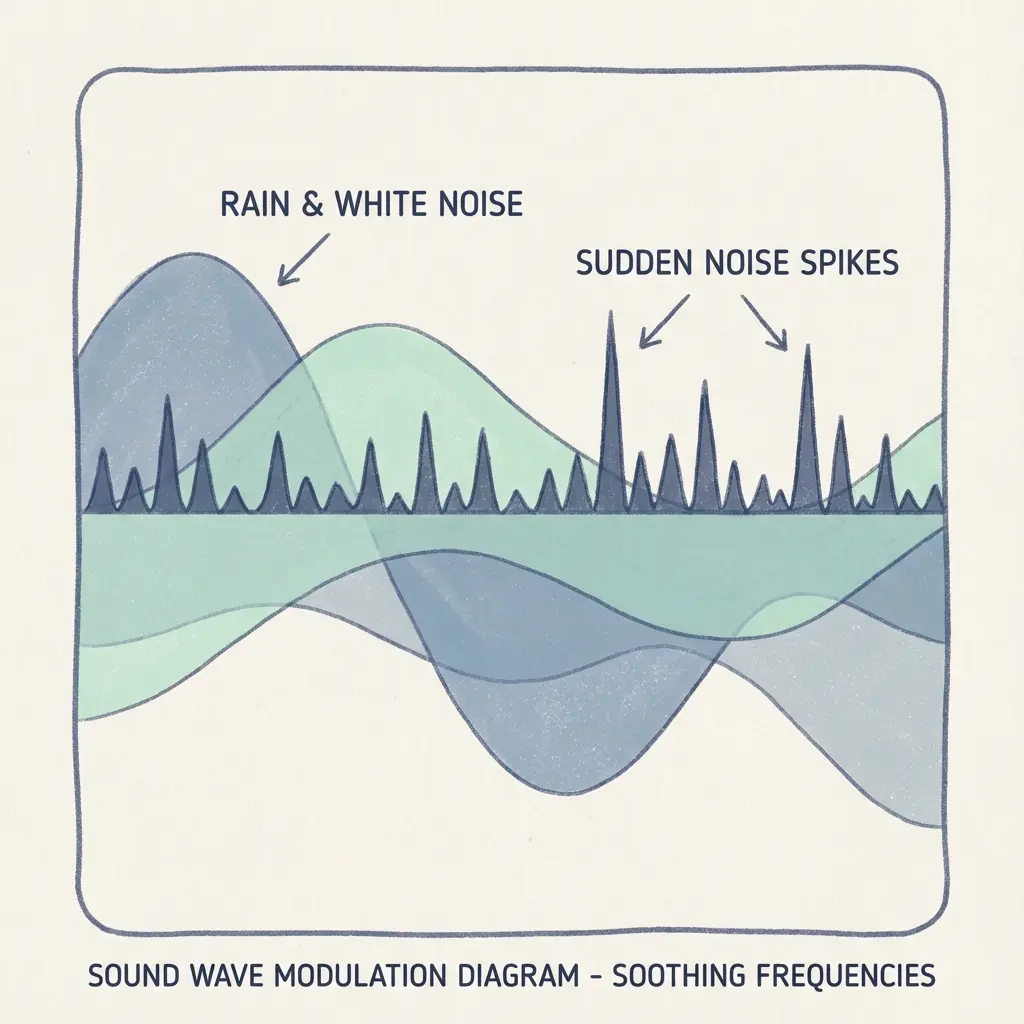
Then, late one Thursday night around 1 AM (thanks again, upstairs neighbor), I tried something different. I opened two browser tabs—one playing a gentle rain sound, another playing a soft, steady hum of white noise. I adjusted the volumes carefully until they blended together just right.
The result felt almost magical. The white noise created a steady "floor" of sound that smoothed out the silence, while the rain added a natural, soothing texture on top—like adding a soft melody to a steady beat. When the neighbor dropped their nightly bowling ball (or whatever it actually is), the noise didn't disappear—but it didn't startle me awake anymore. It just blended into the background soundscape, like thunder in the distance during a rainstorm.
That night, I slept through until morning for the first time in three weeks. When my alarm went off, I actually felt rested instead of groggy and resentful.
Creating Your Own Sleep Sanctuary
The beautiful thing is you don't need expensive equipment or fancy gadgets to try this. There are tons of free apps and websites that let you mix different ambient sounds together. Through my own trial and error (lots of error), I found that the best combinations usually have these qualities:
- Continuous and smooth: No obvious loops, jarring transitions, or sudden breaks that might pull you back to alertness.
- Neutral and non-engaging: Nothing with lyrics, recognizable melodies, or patterns that make your brain want to actively listen and follow along.
- Layered thoughtfully: Combining a steady, constant sound (like a fan humming, stream flowing, or gentle white noise) with a natural texture (like rain pattering, wind blowing through trees, or soft ocean waves) tends to work best for most people.

The key is experimenting to find what feels right for you. Some people love ocean waves, others find them too irregular. Some prefer pure white noise, others need the organic variation of nature sounds. There's no universal "perfect" combination—just what works perfectly for your ears and your brain.
🎵 Build Your Own Sound Blanket
Want to try this approach yourself? I created Sound Sanctuary based on my own late-night experiments. Mix rain, white noise, ocean waves, crackling fire, and more nature sounds together. Adjust each layer's volume until you find that perfect combination that wraps around you like a cozy blanket. It's exactly how I created my own sleep soundscape.
Try Sound Sanctuary 🎧The Unexpected Gift
Here's the funny thing: my upstairs neighbor is still running their mysterious midnight marathon. Whatever they're doing up there continues every single night like clockwork. I still have no idea what it actually is—furniture rearranging? Intense nocturnal exercise routine? Training for American Ninja Warrior?
But these days, I honestly wouldn't know exactly when they start. I'm usually too deeply asleep under my carefully crafted blanket of rain and gentle white noise to notice. The sounds that used to jolt me awake now just fade into the peaceful background storm I've created.
Sometimes the solution to a problem isn't making the problem disappear—it's changing how you experience it. My neighbor didn't change. My apartment's thin walls didn't change. But my nights? Those changed completely.
And honestly, I sleep better now than I did even before the thumping started. Turns out I didn't just need to mask the noise—I needed to discover how much better sleep could be with the right sounds wrapping around me like a cozy blanket.