 Simulations With You
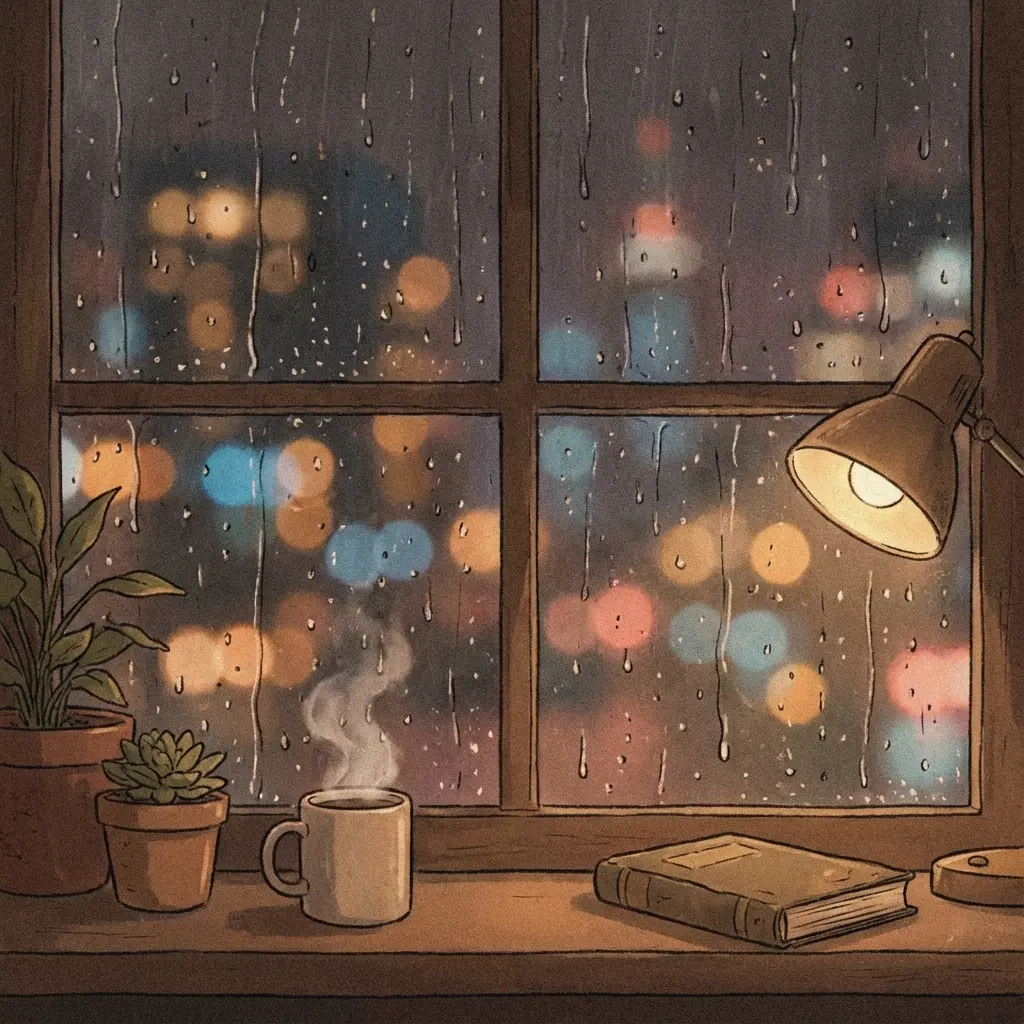
11:42 PM. The world outside is finally quiet—no car alarms, no construction noise, no distant music from open windows. Just one sound remains: the rhythmic tapping of rain. First a gentle whisper, like fingers drumming softly on a tabletop. Then it builds into a steady drumbeat against the glass, a percussion section that plays the same patient rhythm over and over.
I look up from my screen, pulled away from whatever I was doing (was it work? scrolling? I can't even remember now). The window has already fogged up completely, a thin veil of condensation separating me from the city streets below. The glass feels cool against my palm as I lean closer.
I trace my fingertip across the surface, clearing a small circle in the fog. It takes a few seconds—the moisture clings to the glass stubbornly before giving way. Through my handmade peephole, the streetlights look like dancing stars, blurred and beautiful. The red taillights of passing cars streak across the wet pavement like watercolor paint bleeding across wet paper. Everything sharp has become soft. Everything harsh has become gentle.
Most people run from the rain. They open umbrellas with frustrated sighs, hail taxis with urgent waves, and rush to get inside as if the water might burn them. But for some of us, a rainy night is a gift—an unexpected present from the sky. It is the one time the world gives us permission to stop moving, stop producing, stop being useful. Rain is nature's excuse to do nothing.
The Heavy Blanket
There is a reason why we sleep better when it rains. Scientists might talk about barometric pressure or negative ions or the frequency of the sound waves. But I think the real answer is simpler: it's the feeling of being "tucked in" by the atmosphere itself, the way a parent pulls a blanket up to a child's chin and says "you're safe now."
Think of rain as a heavy blanket thrown over the entire roof of your house, over your whole neighborhood, over the whole city. Not one of those lightweight summer sheets that slides off in the night—a proper thick blanket, the kind that has weight and substance. It muffles the sharp noises of daily life. The car horns become distant honks. The sirens fade into background hums. The shouting from the street corner turns into indistinct murmurs.
Underneath that blanket, everything is softer. The edges of reality are less sharp, less demanding. The world can't reach you quite as easily. You are insulated, cocooned, protected. Even your responsibilities seem to understand: "It's raining. We can wait until tomorrow."
Nature's White Noise
It's static for the soul. The consistent, steady sound of rain acts like a shield, blocking out the unexpected noises that usually keep our minds on high alert—the sudden door slam, the car backfiring, the neighbor's dog barking at 3 AM. Our nervous system is constantly braced for these interruptions, waiting for the next sharp sound that demands attention. But when the rain falls, filling every frequency with gentle noise, our internal guard finally comes down. There's nothing to listen for anymore. Everything is already sound.
The Watercolor World
Have you ever noticed how beautiful a city looks through a wet window? Not beautiful in the usual way—not like a postcard or a photograph. Beautiful in the way a half-remembered dream is beautiful, where the details don't matter as much as the feeling.
The harsh neon signs advertising fast food and convenience stores become soft glows, their aggressive reds and yellows mellowing into gentle amber and rose. The chaotic traffic—usually a anxiety-inducing mess of metal and urgency—becomes a stream of red and white ribbons flowing past like a slow river. The grey concrete, normally cold and industrial, turns into a mirror reflecting the purple-black sky and the warm yellow lights from apartment windows.
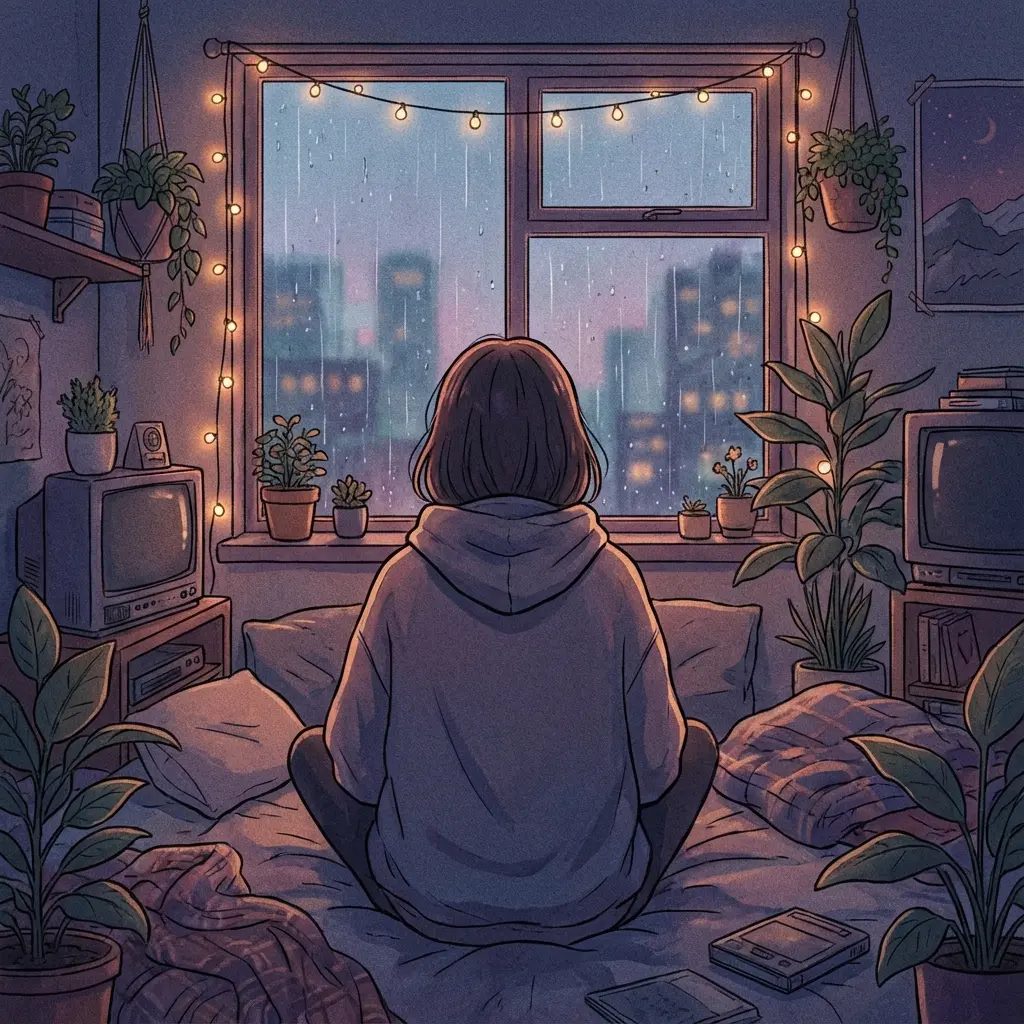
This is what I call the "watercolor effect." Rain turns the high-definition, 4K, ultra-sharp stress of reality into an impressionist painting. Suddenly you no longer have to focus on every detail. You don't need to read the signs. You don't need to watch the signals. You don't need to recognize faces or track movements. You can just sit there and look at the colors moving past, like watching paint bleed across wet canvas.
It's a visual rest—maybe the only visual rest we get anymore. In a digital world where everything is crisp and sharp and high-resolution and demanding our attention with notifications and headlines and bold fonts, a blurry window is a rare mercy. It's permission to let your eyes go soft, to stop straining, to stop trying to see everything clearly.
Creating Your Sanctuary
You don't need a storm of the century to find this peace. You don't need thunder and lightning and dramatic weather warnings. You can create a rainy night ritual even with the lightest drizzle, even with that disappointing half-rain that can't decide if it's really committed to falling.
Here's what works for me:
- Dim the lights: Turn off the overhead lights completely. They're too bright, too clinical, too much like daytime. Mimic the dark grey sky outside. Use a warm-toned lamp in the corner, or light a candle if you have one. The goal is to create a cave-like coziness, a contrast between the bright cold world outside and your warm dim sanctuary inside.
- Warmth in hand: Make something hot to hold. Tea, cocoa, coffee, even just hot water in your favorite mug. The warmth in your hands contrasts perfectly with the cool glass of the window when you lean against it. It's a physical reminder: you are warm and dry. The rain can't touch you.
- The observation spot: Find your window. Not just any window—your window, the one with the best view or the comfiest seat beside it. Sit by it. Pull a blanket around your shoulders if you want. And then—this is the crucial part—don't look at your phone. Don't check email. Don't scroll. Just sit and watch the droplets race each other down the glass. Pick a favorite. Root for it. Notice how the light hits the water.
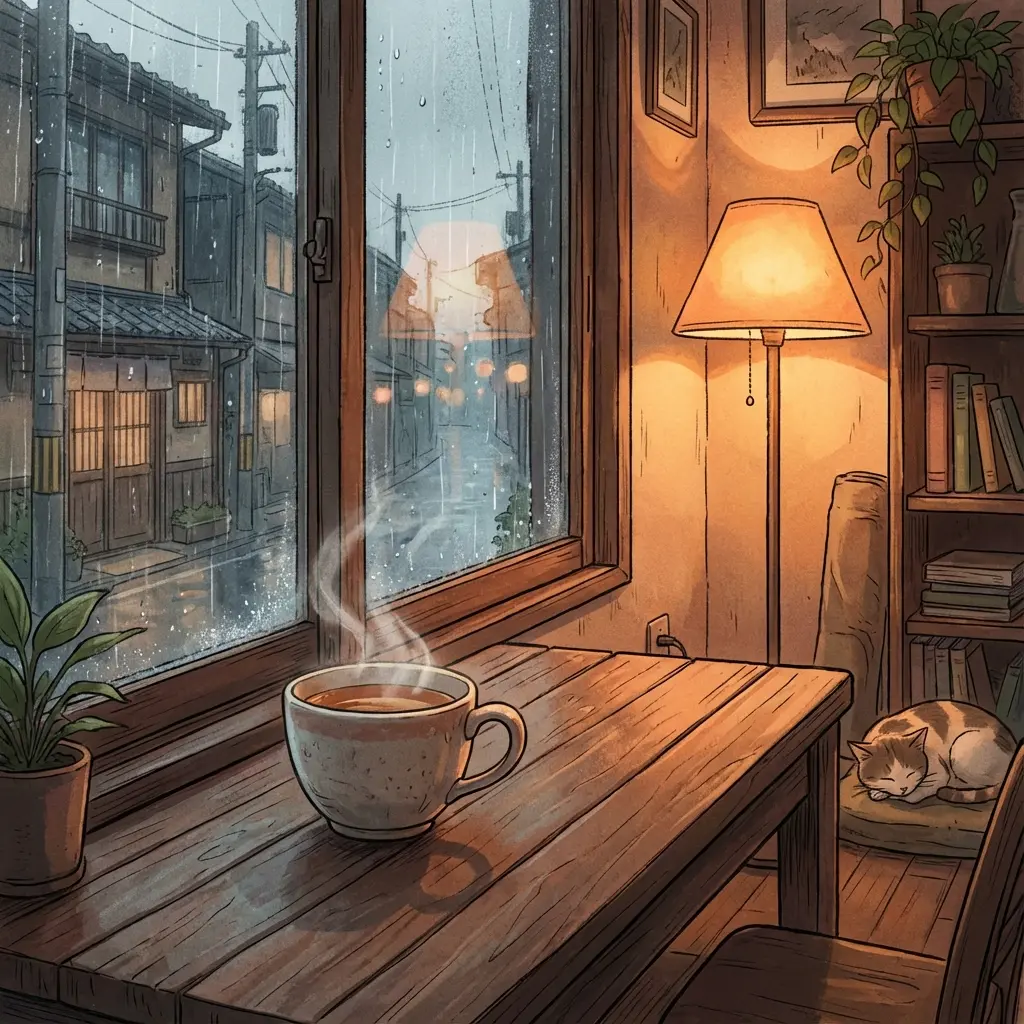
That's it. That's the whole ritual. It sounds almost too simple to matter, doesn't it? But simple is exactly what we need. Complicated rituals require energy and decision-making. This requires nothing but permission—permission to stop, to sit, to watch.
Try This: The Condensation Canvas
Next time you are near a fogged-up window (or a bathroom mirror after a hot shower), try this simple act of impermanence. It's oddly meditative:
- Draw a shape. Use your fingertip to draw something in the condensation. A circle. A heart. A smiley face. Your initials. A stick figure. It doesn't matter what—just something simple and clear.
- Watch it fade. This is the important part: don't wipe it away yourself. Just watch as the condensation slowly reclaims it, molecule by molecule, turning your clear drawing back into opaque mist. It takes longer than you'd think—sometimes a full minute or more.
- Breathe deeply. As your drawing disappears, imagine one worry disappearing with it. Just one. Pick something small that's been nagging at you. Watch it fade along with your drawing. It was there, solid and real. And now it's gone, returned to the water, back to being nothing in particular.
- Draw again if you want. Or don't. Both are fine. There's no goal here except to notice that everything—even a mark on foggy glass—is temporary.
It's a tiny practice of letting go. And some nights, tiny is exactly the right size.
When the Sky is Clear
The only problem with rain is that we can't schedule it. We can't summon it when we need it most. Sometimes you have a stressful Tuesday afternoon—deadlines piling up, notifications pinging, that tight feeling in your chest—and the sun is aggressively shining outside like it's personally mocking your stress. You desperately need that heavy blanket feeling, that permission to stop, but the sky refuses to cooperate. The weather app shows nothing but cheerful sun icons for the next ten days.
That is why I built my own window.
I wanted to capture that specific feeling—safe inside, storm outside, warm and dry while the world gets wet—and make it available on demand. A rainy window that exists whenever you need it, regardless of what the actual weather is doing. A digital sanctuary where it's always 11:42 PM and always gently raining and you can always press your palm against cool glass and watch the city blur into watercolors.
🌧️ Open the Digital Window
I created Rainy Window for those days when the sun won't stop shining but you need the rain anyway. Step into a room where it is always raining. Listen to the thunder rumble in the distance, watch the droplets race down the glass, trace shapes in the condensation with your mouse. The storm is always there when you need it. No umbrella required.
Enter Rainy WindowClosing Thoughts
In a world that constantly shouts "Go, Go, Go," a rainy night whispers "Stay." Not as a command, but as an invitation. As permission.
It is nature's stop sign, the universe's official excuse note. "They can't leave the house today. It's raining." Suddenly all that pressure to be productive, to be social, to be constantly moving forward—it lifts. Just for a little while. Just until the rain stops. Rain justifies our deep, secret need to do absolutely nothing.
So the next time the clouds gather and the first drops hit the window, don't sigh with frustration. Don't immediately reach for an umbrella and brace yourself to fight through it. Instead, if you can, make a cup of something warm. Find your window. Pull up a chair or a cushion or just sit on the floor with your back against the wall. And let the world blur for a while.
Watch the streetlights turn into stars. Listen to the drumbeat on the glass. Trace a shape in the condensation and watch it fade. Let the heavy blanket of sound settle over your neighborhood, over your building, over your room, over you.
You are safe inside. The storm can't touch you here. And for this one rainy night, that's enough.