 Simulations With You
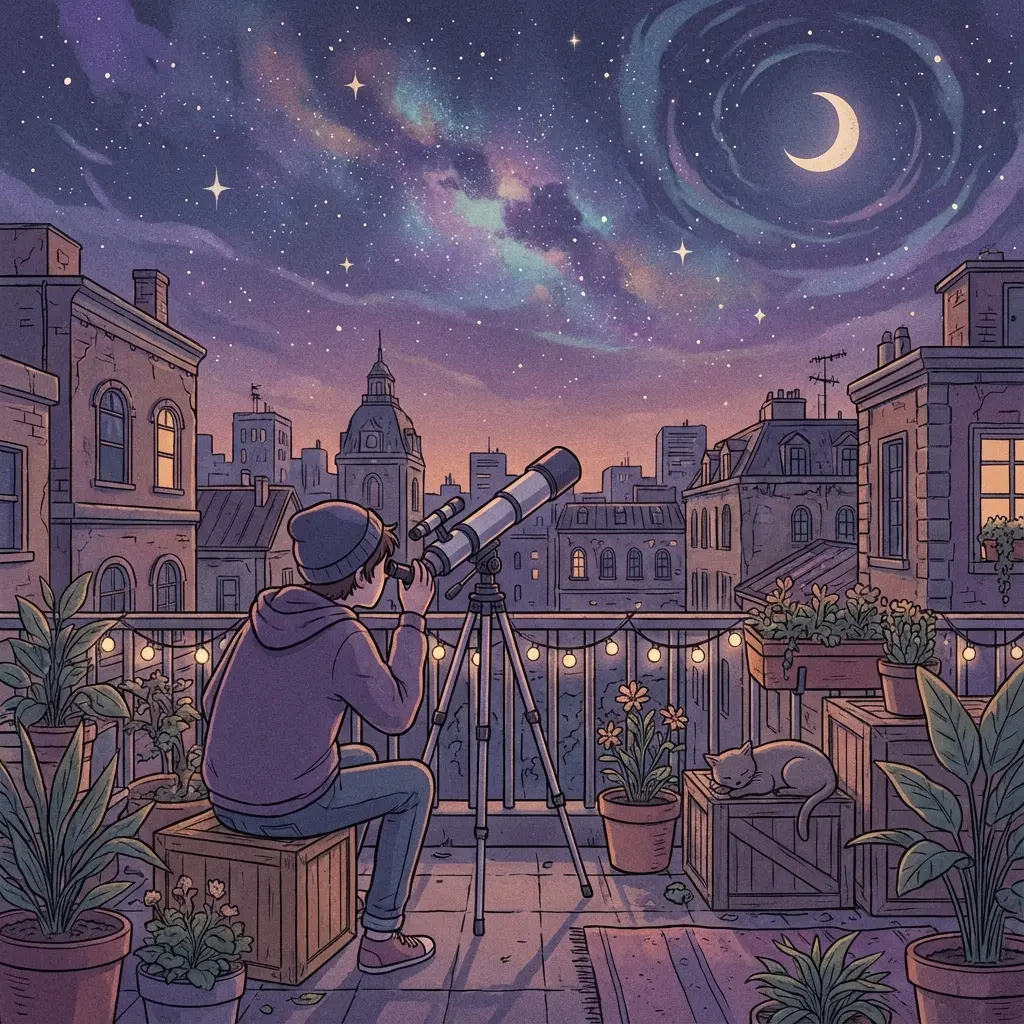
Looking out the window, I see a forest of buildings. As evening falls, neon signs flicker to life and streetlights illuminate the streets below. The city skyline is beautiful in its own right, but when I look up at the sky, I realize there are no stars. On the rare occasion when I'm lucky enough to spot one or two, I find myself stopping to gaze at them for longer than I probably should.
The truth is, I used to be completely indifferent to the night sky.
When the Night Sky Was Just a Dark Canvas
As a child, the night sky was nothing more than a dark backdrop. Walking home after playing with friends, I barely remember looking up. Stars were just tiny dots. The moon was bright or crescent, nothing more.
Astronomers on TV peering through telescopes seemed pointless. Space documentaries were just interesting footage. The universe felt impossibly distant and irrelevant to my life.
Constellation diagrams in textbooks made me skeptical. "You connect those dots and get that shape?" I didn't understand people who got emotional about the night sky. Just darkness with scattered points of light—what could be so special?
An Unexpected Encounter
Everything changed at the high school club fair. Walking past the astronomy club's booth, an upperclassman called out enthusiastically. I wasn't interested, but their passion drew me in anyway.
The table displayed star charts, telescope photos, and observation logs. They showed me images taken through their telescope—Saturn with its rings, Jupiter with its tiny moons dancing around it. Honestly, I still wasn't intrigued. But their eyes lit up while explaining, suggesting maybe there was something special here after all.
"We're observing next weekend. Want to come? Looking through the telescope is completely different from photos."
I hesitated, then said yes. That single word changed everything.
A New World Through the Eyepiece
The first observation session was a weekend evening. Telescopes stood in a corner of the school field as members searched the darkening sky. My heart raced as I waited my turn, wondering if this would really be worth the hype.
An upperclassman aimed the telescope at the Moon. "Okay, take a look."
I brought my eye to the cold eyepiece and stopped breathing.
This wasn't the Moon I'd always known—not just a bright disk hanging in darkness. It was a world with visible craters scarring its surface, rough terrain telling stories of ancient impacts, and three-dimensional contours created by light and shadow dancing across alien landscapes. The Moon I'd dismissed as a simple circle suddenly revealed itself as an actual, tangible world existing beyond our atmosphere.
"Incredible..." The words escaped before I could stop them.
The upperclassman smiled knowingly. "Everyone says that the first time."
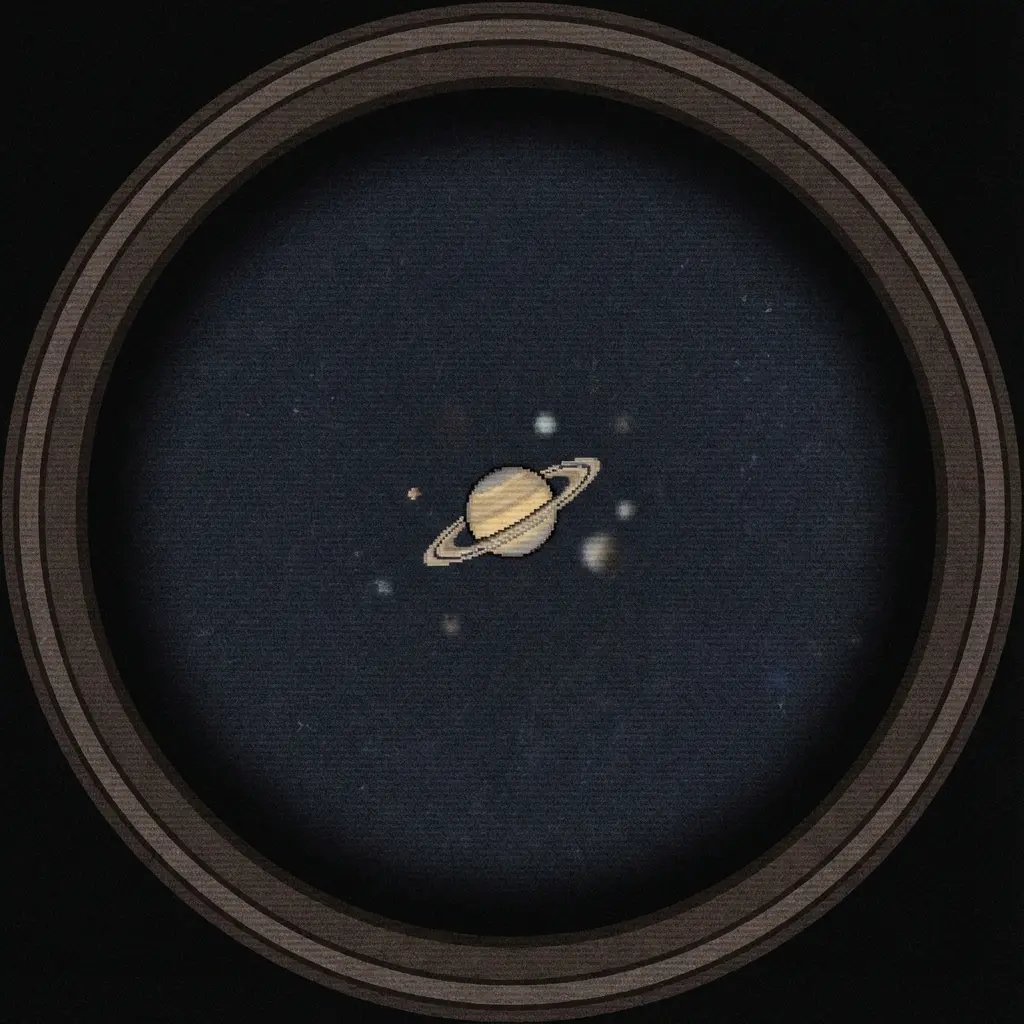
Next came Jupiter—a small planet striped with distinct bands of swirling clouds, surrounded by four steady points of light. Galileo's moons, the very ones that changed astronomy forever, right before my eyes. I was seeing a world hundreds of millions of kilometers away, light that had traveled across the solar system to reach this moment.
Saturn's Rings
Saturn's rings left me speechless. Those rings from textbook photos were actually there—a delicate, thin disk encircling the planet like a cosmic halo, something from science fiction except this was utterly, impossibly real.
Walking home that night, I kept looking up. The same sky I'd walked under countless times, yet completely transformed. Each tiny point was an actual star, possibly with its own planets orbiting in the darkness. The thought sent shivers down my spine and opened a door in my mind that would never close again.
Days of Seeking the Stars
After that night, everything changed. I joined the astronomy club, borrowed telescopes constantly, and devoured astronomy books. I memorized star charts, calculated planetary positions, and eagerly awaited the next observation session.
Clear weekends meant trips to the school rooftop with a telescope. Finding targets was challenging at first—locating specific objects in the vast sky proved harder than expected. But gradually, I learned to navigate by constellations and track down Jupiter or Saturn. The Andromeda Galaxy remains unforgettable—a faint smudge that was actually another galaxy 2.5 million light-years away. The light I saw had traveled for 2.5 million years.
Winter nights numbed my hands, but the Orion Nebula's blue glow made me forget the cold. Summer brought mosquito bites as I scanned the Milky Way. When meteor showers were predicted, I'd stay up counting shooting stars.
Under the City Lights
Years later, I live in the city. Daily routines leave little time to look skyward. When I do, only a few faint stars appear between buildings and streetlights.
Sometimes old memories surface—moments on the school rooftop, holding my breath while adjusting focus. The thrill when Saturn's rings appeared. The joy of spotting Andromeda's faint glow.
Still, I look up occasionally. At the bus stop, walking home, I'll raise my head. Usually nothing appears, but when a bright star emerges, I stop and gaze. Jupiter? Venus? A distant sun? I can't tell, but simply looking suffices. This tiny light traveled millions of kilometers to reach my eyes—that alone is wondrous.
✨ Hold a Galaxy in Your Pocket
Missing the stars? You can hold a universe in your hand with our Galaxy Jar simulation. Swirl stars, create colorful nebulas, and watch them dance. It's a small piece of cosmic wonder you can visit anytime, even when the city lights are too bright.
Open Galaxy JarStars in Small Moments
These days, I look at the daytime sky too. Beyond that blue expanse, stars are shining—invisible because of the sun's brightness, but still glowing. When I remember the daytime and nighttime sky are both part of the same universe, ordinary days feel more special.
Staring out a café window or gazing absently during meetings, I'm suddenly transported back. The first Moon through a telescope. Saturn's rings appearing before my eyes.
My childhood self had no interest in the night sky. One experience changed everything. The Moon's craters, Jupiter's bands, Saturn's rings—not just sights, but moments that transformed my life.
The night sky remains. Even if I can't see it now, stars keep burning. Thinking about seeing them again makes today's routine more bearable. Memories of growing up beneath the stars continue shining within me, even in a city where stars no longer appear.