 Simulations With You
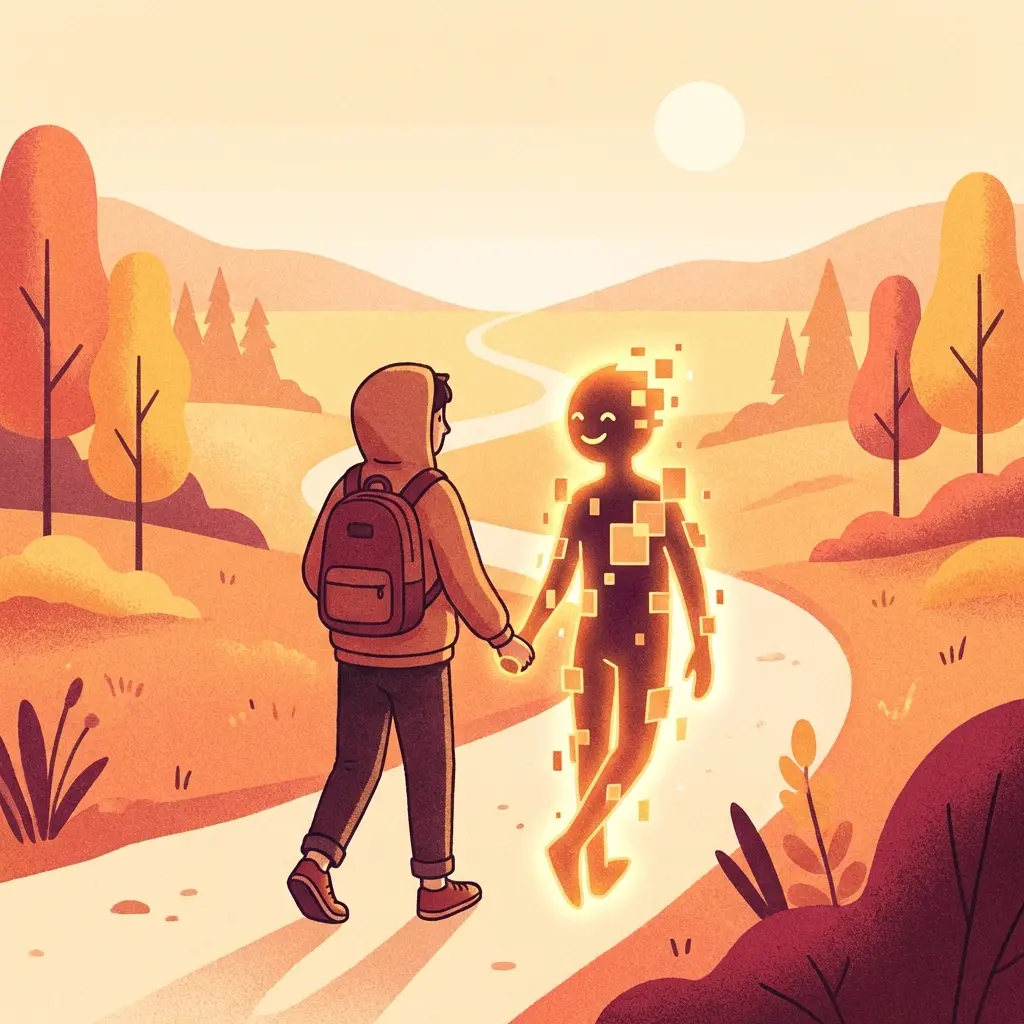
When I First Heard the Name
It was sometime around 2022, I think. I can't quite remember the exact timing, but that's when I first heard the name ChatGPT. I remember someone saying excitedly, "There's this new AI that just came out!" To be honest, I thought it was just a more advanced chatbot—you know, like those upgraded versions of the programs at the bottom of websites asking "How can I help you?"
At that time, I was learning a new language. The hardest part of learning a foreign language was the lack of opportunities to actually use it. I tried language exchange apps and joined online communities, but the time zones never matched up, or my conversation partners were too busy to keep the conversations going.
Then a thought struck me: "What if I could practice the language I'm learning by chatting with this AI?" A conversation partner available 24/7, who never gets tired, and who would patiently wait for my clumsy expressions. That was all I thought about back then. I had no idea it was a revolutionary technology or that it would change the world.
Between Expectation and Disappointment
My first experience using it was complicated. It was definitely interesting, but at the same time, quite disappointing. When I typed simple greetings, pretty natural responses came back. "Oh, this is better than I expected," I thought. But when I asked more complex questions or specific information, things changed.
Once, I asked about a small museum in a particular city. A confident answer came back, but when I checked later, that museum didn't even exist. The address, operating hours, exhibition content—all made up. Other times, it would confidently state information that completely contradicted what it had just said, as if it were saying it for the first time.
I learned the term "hallucination" later. It refers to false information that AI makes up convincingly. At first, it was almost amusing, but soon I found it hard to trust. Maybe I could use it for language practice, but I decided it wasn't something I could rely on for important information.
After trying it a few times, I gave up. "Well, it's interesting but not very practical," I concluded. So I forgot about it for a while, thinking it was just another curious technology that would appear and quietly fade away.
A Scene That Became Everyday Life
But as time passed, things gradually, very gradually, began to change. People around me started talking about AI one by one, and at some point, I was hearing about it several times a day. Stories like "I asked it about this and it told me that," or "It helped me solve this problem."
At first, I just let it pass. "Oh yeah? That's nice," was about all I said. But as more and more people used it in increasingly diverse ways, I became curious. What really struck me was when someone said they got help understanding a complex contract. It was full of technical jargon that made it hard to read, but the AI explained it in simple terms.
Curious, I tried it again. And I was amazed. It was clearly the same service, but the quality of responses had changed. It still wasn't perfect, but it was definitely more accurate and more useful. Most importantly, people were using it in truly diverse ways.
A New Collaboration
Document writing, organizing ideas, coding, translation, summarization... Before I knew it, AI had become not just a novel technology, but a tool woven into many people's daily lives. It became natural for someone in a meeting to say, "I asked AI about this and organized it," just like saying "I searched for this on Google."
And I realized: this wasn't a matter of choice. It had become the kind of technology where not using it would naturally leave you behind. The gap between people who could do more work in the same amount of time and those who couldn't was widening.
A Changing World, a Wavering Heart
Looking around, I found many people with similar concerns. The biggest worry was especially "Will AI replace my job?" Whether over coffee or on the subway ride home, these conversations came up naturally. "Our company is adopting AI soon," "Then how many people will they need?" conversations like that.
I felt the same way. Honestly, I think it will happen. It's obvious—from a business perspective, they'll choose methods that save costs and time.
When you hire a new employee, training is needed, salaries must be paid, and various benefits provided. But AI can work 24/7 without rest, doesn't complain, and learns quickly. Emotionally, it's a hard reality to accept, but logically, it's entirely possible. I think the work I'm doing now will eventually be replaced too. I don't know exactly when—it could be in 5 years, 10 years, or maybe sooner than I think. That uncertainty sometimes feels heavy.
From Worry to Acceptance
But one day, I suddenly realized: I couldn't just keep worrying. Or more precisely, I decided I wouldn't "only" worry. Worrying is a natural emotion, so I can't force it away, but I couldn't spend all my time on it either.

Change has already begun and will continue. If it's unavoidable, then shouldn't I learn how to coexist with it? Rather than seeing AI as an enemy or fearing it, I thought it would be more realistic to think about how to collaborate with it.
So I added something to my to-do list, quite high on the priority list too: "Learning to work with AI." In a world already overflowing with things to learn, it's one more thing added, but I thought of it as essential, not optional.
New Technology, Old Wisdom
Come to think of it, humanity has always experienced moments like this. During the Industrial Revolution, when computers first appeared, when the internet spread—there were similar worries. "Machines will steal people's jobs," "If everything becomes automated, what will we do?"—fears like these.
But at the same time, new possibilities opened up. Many of the conveniences we enjoy now are also results of those technological changes. Of course, the process wasn't easy, and there are still problems to solve. But one thing is clear: those who accepted and adapted to change rather than resisting it had better options.
The world will change even faster in the future. It already feels fast enough, but a few years from now, today might seem slow. That's why I think the ability to respond flexibly to change is even more important.
The Path We Walk Together
These days, I'm gradually learning how to use AI. Like at first, I use it for language learning, organizing ideas, and reducing repetitive tasks. I'm not completely dependent on it. It's more like I've gained a good colleague.
When I suggest a direction of thinking, AI expands or refines it, and I review and revise it again. It's like collaborating.
Sometimes it's frustrating. Sometimes it doesn't understand exactly what I want, and sometimes it still gives strange answers. But don't we have moments like that when working with people too? Understanding each other, adjusting, finding better methods—the process itself is collaboration.
I'm also learning that what's important isn't the technology but people. No matter how advanced AI becomes, in the end, it's people who make judgments and take responsibility. The tool's quality matters less than how you use it. I feel this every day.
An Uncertain Future, A Certain Present
Honestly, I don't really know what our lives will be like in the future. Even imagining the world 10 years from now, or even 5 years from now, is difficult. Maybe what we're worrying about now will turn out to be needless, or conversely, problems we can't even imagine might arise.
But that's not only frightening. Being uncertain also means possibilities are open. The future can change depending on what choices we make. And the moment of choice is right here, right now.
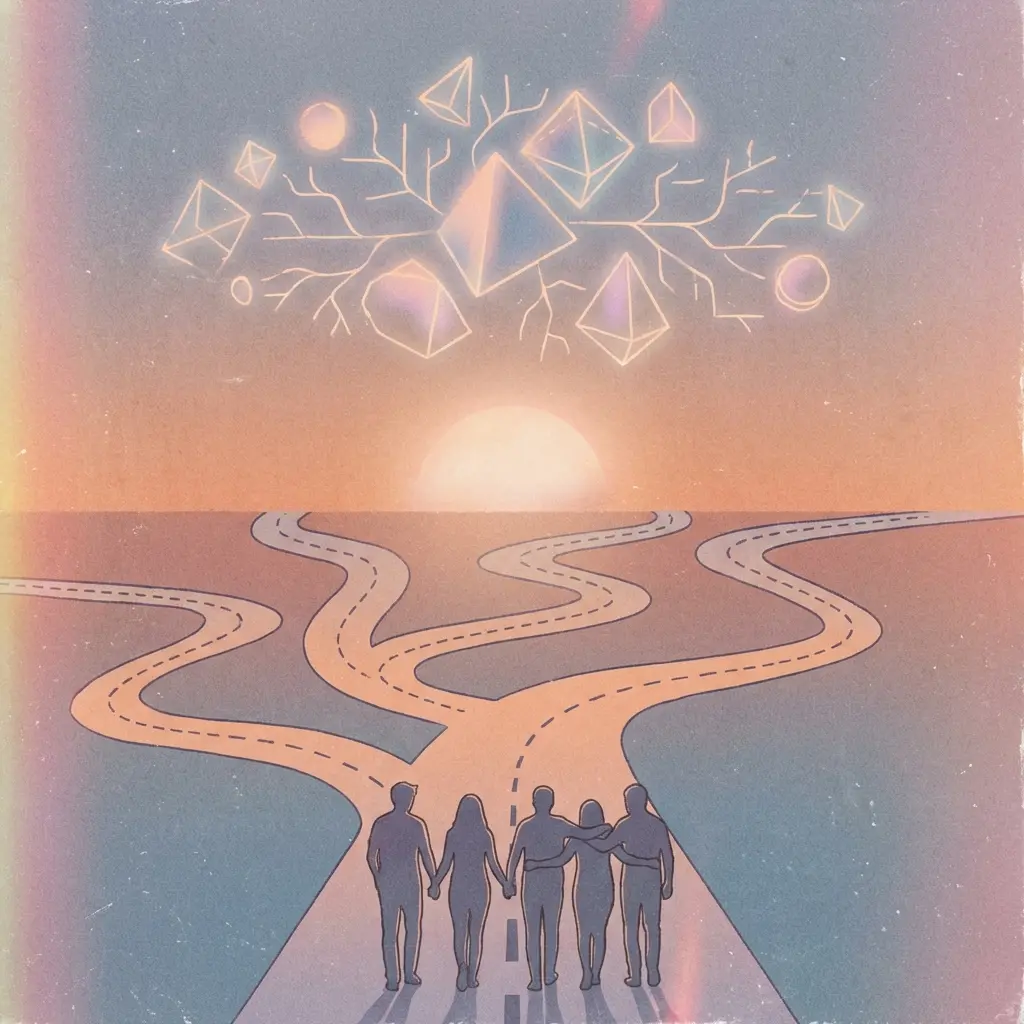
I'm accepting new technology, learning how to coexist with it, and at the same time trying to preserve the unique value of being human. It's not easy, but if I do it one step at a time, won't a path reveal itself?
Let's Walk Together
You, reading this, might be having similar concerns. Change is frightening, the future is uncertain, and it might feel overwhelming not knowing where to start. I understand that feeling completely. I felt the same way.
But wouldn't it be a little less scary if we're together? We're not alone. There are so many people with the same concerns, and we can learn from each other, share, and grow together. You don't need to be perfect, and you don't need to know everything. Just learn little by little, one thing at a time.
The world is changing rapidly, but some things don't change. The will to learn, the effort to adapt, the heart to understand each other. These things will remain important no matter what technology comes along.
So, don't just worry too much. Of course, worrying is natural. But how about turning that worry into action? Learn new things, try them out, and get back up even if you fail. As you do that, before you know it, we'll have found our own place even amid the changes.